
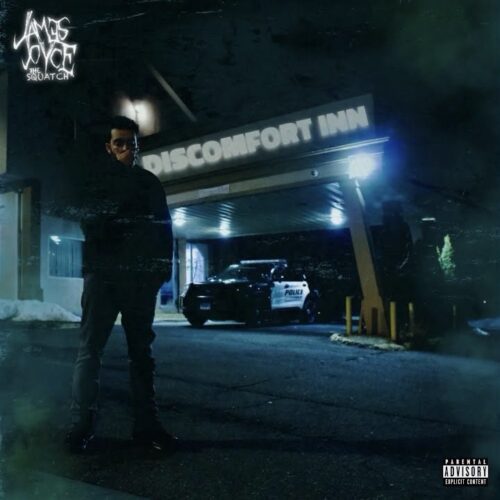
Brooklyn-based emcee James Joyce the Squatch has returned with his fourth studio LP, Discomfort Inn. A pivotal figure within the Nitebreed collective—alongside collaborators Donnie Menace and White Cheddar—the artist has spent years carving out a niche in the underground scene. Following his previous projects, including Pawn Your Heart of Gold and Dapper Scumbags: Reality Check Cashing, this latest release marks a significant evolution in his career, bolstered by his recent signing to the Rogue Hollow imprint.
The album is defined by its sonic consistency, largely thanks to the production work of label in-house talent Charlie Beans. By handling the majority of the album’s soundscape, Beans provides a cohesive backdrop that allows the rapper to explore deeply personal, confessional lyrics with newfound clarity.
A Sonic and Lyrical Evolution
The project opens with “Butterflies & Bile,” a track that sets the tone with a sinister boom-bap instrumental. The song serves as a meditation on the difficulty of trusting one’s intuition. As the album progresses, the production shifts through various textures, from the heavy g-funk and trap influences of “Chef’s Kiss” to the chopped-and-screwed undertones of “237.”
The narrative depth of the album is perhaps best exemplified in tracks like “Cat n’ Mouse,” which delves into the darker aspects of the human psyche. The project also features a guest appearance from Stray on “Little People,” a track that offers a sharp critique of those lacking purpose, while “Know Your Worth(less)” channels the unapologetic, hardcore energy reminiscent of Heltah Skeltah.
The Second Half: A Deeper Descent
The latter half of Discomfort Inn continues this exploration of identity and struggle. Tracks like “Phoenix Down” blend cloud rap with boom-bap, capturing the artist’s internal journey, while “Ghost10” and “Plottin’ & Schemin’” offer a raw look at the artist’s confrontation with his own demons. The production remains a standout throughout, elevating the project above his previous solo efforts.
Ultimately, this record stands as a testament to the artist’s growth. By focusing on a singular production vision, James Joyce the Squatch has crafted a project that feels both intimate and expansive. It is a compelling album review of a man coming to terms with his past and his present.