
No Ceilings
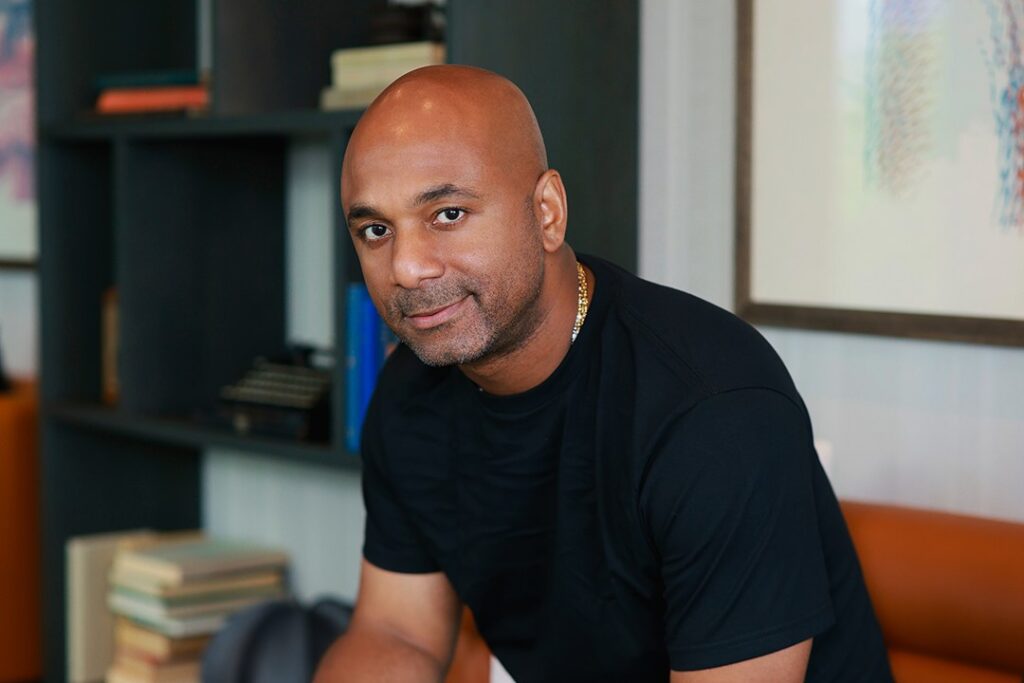
Wallo267 is the wise elder that hip-hop has been clamoring for. Eight years after serving a 20-year prison sentence, the podcasting powerhouse is at the forefront of a wave that has positively changed the game.
Interview: Joey Echevarria
Editor’s Note: This story appears in the Fall 2025 issue of XXL Magazine, on newsstands now and available for sale on the XXL website.
Wallo267 isn’t afraid to be real with rappers, and he’s not hesitant to show his emotions either. In 2022, during an impactful episode of his podcast, Million Dollaz Worth of Game, alongside cohost Gillie Da Kid, the 46-year-old multimedia personality made a heartfelt plea to Lil Durk and a group of the rapper’s Only The Family members. Wallo urged these young men from the streets of Chicago to seize their opportunities and move away from a life of crime. Even though Wallo’s words may have fallen on deaf ears for Durk, who’s currently in jail facing trial for a murder-for-hire plot, Wallo remains steadfast in his mission to use his own decades-long experience in prison as a means for motivation and growth.
Wallo267, whose real name is Wallace Peebles, entered the Pennsylvania criminal justice system at the age of 11. Throughout his teenage years in North Philadelphia, he never spent a whole year outside of a penitentiary. In 1997, at the age of 17, he was convicted of armed robbery and served 20 years in various state prisons. Despite the challenges of incarceration, those two decades became a valuable crash course in discipline and self-control for him.
After his release in 2017, Wallo began documenting his new life on his Instagram account, @Wallo267, a reference to his former prison inmate number, DG-2670. His blend of humor and genuine human insight made his journey toward redemption increasingly popular on social media. In 2019, he launched the podcast Million Dollaz Worth of Game, partnering once again with his cousin Gillie Da Kid, with whom he had previously collaborated as part of rap group Major Figgas. Their combination of candid and unfiltered interviews with high-profile guests, along with their confident and humorous street knowledge, set a new standard in the evolving hip-hop landscape.
Wallo has successfully transformed from an ex-convict into a mainstream media mogul, motivated by a desire to inspire marginalized communities. One year after having his 31-year parole completely lifted, Wallo is a masterclass in motivation. Whether through his 2024 New York Times best-selling book, Armed With Good Intentions, or his engaging YouTube shows from Nanny’s House Entertainment, Wallo is always pushing forward.
As one of the most influential voices in the culture, Wallo267 connected via Zoom this past August to discuss the importance of maintaining discipline, how he uses comedy as a way to deliver his message, the future of Million Dollaz Worth of Game, the lasting impact he hopes to have in hip-hop and more.
XXL: The Million Dollaz Worth of Game podcast has had such an impact on the culture. What do you consider some of the show’s most important moments?
Wallo267: I can’t say a moment. I can just say the information that we’ve brought to people, whether it was the business spotlight, whether it’s just hearing somebody’s story, whether it’s just humanizing the artist, whenever it’s just me speaking the truth, it empowers. It’s so many different moments.
We’ve seen incredible things, like the famous Lil Durk speech and what you said to that room, and plenty of other moments. Does it ever feel like a never-ending uphill battle to deliver your message?
To be totally honest with you? No. And the reason I say no is because everybody’s alarm clock comes on at different times in life, and I’ll always be real considerate about mine. It took me decades for me to get it right, and just because you’re telling somebody what’s right, that don’t mean they’re going to be receptive to it at that moment.
They might not be open, and their mind might not be there. Their heart might not be there. So, everybody got a different time. I’m never going to be judgmental of people just because I got something to say, and I think it’s important that they should stop and listen. And it might even be beneficial to them, but they might not be at that place of life right now. So, I’m understanding of that.
Both you and Gillie Da Kid have many other business ventures popping off. Have you ever discussed an endgame for the show you guys do together, or do you both roll with it and grow accordingly?
I think everything has an end. When that end is? We’re not ready to put that together yet, but it’s definitely an end for everything. You can’t do something forever. We talk about a lot, but we’re going to continue to take care of the people the best way we can until we decide not to.
Do the jokes and sense of humor on Million Dollaz Worth of Game ever get in the way of delivering your overall messages of hope and motivation?
You got to think about it. If you can make ’em laugh, you can make ’em listen. Some of our greatest teachers were comedians: Paul Mooney, Richard Pryor, Redd Foxx. When you can open somebody up through laughter, and then you can slide the truth in there, it’s much more digestible and they’re more receptive to it. It plays hand-in-hand.
It’s one thing to have an audience that understands the jokes and the nuances of the show, but do you ever feel the need to entertain via sound bites due to “clip culture,” as they say?
What I do is organic. So, I don’t have to worry about that. What I realize, a lot of this clip culture and all that stuff, it don’t last. I’ve been around for years, and I’ve seen people come and go. It don’t last. When you’re just true to who you are and authentic, that right there, that’s timeless. You’re going to be OK. All you got to do is continue to be you.
With so many people realizing that a transition from hip-hop to media personality is a valid option for the future, how do you maintain your position as one of the most prominent people in your space?
I wake up, do me, and everything play alright for me. I ain’t got to be somebody else. A lot of people got to be all these different people, and it’s hard. My mission statement, “F what they think,” right? That alone allows me to be me. So, I ain’t got to keep switching up. Most people don’t even got that mindset. They got to keep switching up and try to figure out what people like, what they don’t like. If they like me today and they don’t like me tomorrow, whatever department I might be in, it don’t matter to me.
What is it that keeps you motivated to think that way?
It’s not really about motivation. It’s more about discipline. Motivation is a momentary thing. You’re hype today. Are you going to be hype forever? Are you disciplined enough to say, “What I’m doing today, I’m going to do for a year straight. I don’t care what happened, why it happened, where it happened, who it happened with, I’m not deviating from what I’m doing.” That’s a different game.
Now that you’re eight years removed from prison and it’s been one year since you were let off parole completely, what impact do you feel you’ve left on rappers and followers who come from marginalized backgrounds?
I think I’m an example of change, an example of what you can be no matter how hard the struggle was in the beginning. You can really make it happen out here and do some great things if you really believe in yourself and you don’t overthink it.
You got to be around the right people. You got to connect with the right people. You just got to have your mind right and know what you want. You don’t have to know, fully. You can know just 15 to 20 percent, and just stay dedicated to that, and everything will come if you just stay down.
Many consider you to be the OG that hip-hop needs in the modern era. You’re sort of like the elder in the game to show the right path.
Thank you.
What do you find rewarding about that and is there a downside?
I’m just happy to be able to lend some words or lend a helping hand. So, I don’t really look at it as a downside. It’s not none. [Hip-hop is] the soundtrack of everything that we’ve ever done coming from the hood. So, I’m happy to be in close proximity to something that I love so much. That’s the triumph.
How would you describe your place in hip-hop as it pertains to the music, your relationship with rappers and the culture in general?
You know what’s crazy? Back in the day, I used to rap, and I never really got it off because I went to prison. But recently, I can say I went platinum. I’m on a platinum project with BigXthaPlug. I’m on his [Take Care] album three times. So, now it feels like I’m in the books. I might haven’t been able to rap no more, but speaking on people’s albums, anybody from Hunxho to Toosii to Larry June to Conway the Machine to Smoke DZA, Coi Leray. That’s major.
It is. But outside of that, you’ve helped culminate an entirely modern platform that is 100 percent hip-hop in both attitude and theory. When it’s all said and done, what do you want the culture to say about Wallo267?
I just want to be able to say that I was a contributor and I’m cool with that. [I want them to say] that I contributed a platform, me and Gillie, to the culture in a different way. To be able to be a part of that in some type of way, I’m happy.
As you continue to grow as a mainstream media personality, do you ever reach a level that is bigger than hip-hop for you, and what does that mean for the organic audience you’ve developed?
It’s already beyond hip-hop. My true audience, they love to go on the journey with me, and it’s my job to educate them about different ideas, different cultures, different outlooks because that’s what life is about. Life is about growth because you can’t stay 10, 15, 20 [years old] forever. I just take people on a journey, and everybody that want to go with me, they could go.
Some people might feel as though they don’t want to go that route. If they don’t, I respect them, and I thank them for being a part of whatever it was that we had, but it’s about growth and development at all times.
Do you ever see a point in which your work reaches past motivating people who have similar experiences to yours?
I believe it’s already past that. It’s just a part of my story that I was incarcerated. I could speak to that audience, but I can also speak to an audience that is Ivy League educated. That’s the whole point. That’s the true thing that you really want to witness. You want to see somebody that came from the bottom and go all the way up to unimaginable places.
You can’t go to unimaginable places when you’re stagnated, and you’re just so concerned about your audience that you forget about growth. Growth supersedes audience. There’s always new people coming. There’s always an audience for greatness, and that’s the only audience you’re supposed to focus on.
The fall 2025 issue of XXL magazine featuring Wallo267’s interview is available to purchase here. The issue also includes Joey Bada$$ and J.I.D’s cover story interviews, conversations with Chance The Rapper, Rob49, Curren$y, Hit-Boy, KenTheMan, Bay Swag, Hanumankind, Babyfxce E, Ghostface Killah, Hurricane Wisdom, Conway The Machine, Pluto, TiaCorine, Isaiah Falls, comedian Josh Joshson, Vice President of Music at SiriusXM and Pandora Joshua “J1” Raiford, a look at the change in album rollouts over the years highlighted by Clipse’s Let God Sort Em Out album and more.
See Photos From Joey Bada$$ and J.I.D’s XXL Magazine Fall 2025 Cover Shoot
